The material system
SUWOL-LJJ1950
A weave that holds fibre density above 1,950 g/m² without flattening the pile. The code names the density; the density is the whole idea.
A weave that holds fibre density above 1,950 g/m² without flattening the pile. The code names the density; the density is the whole idea.
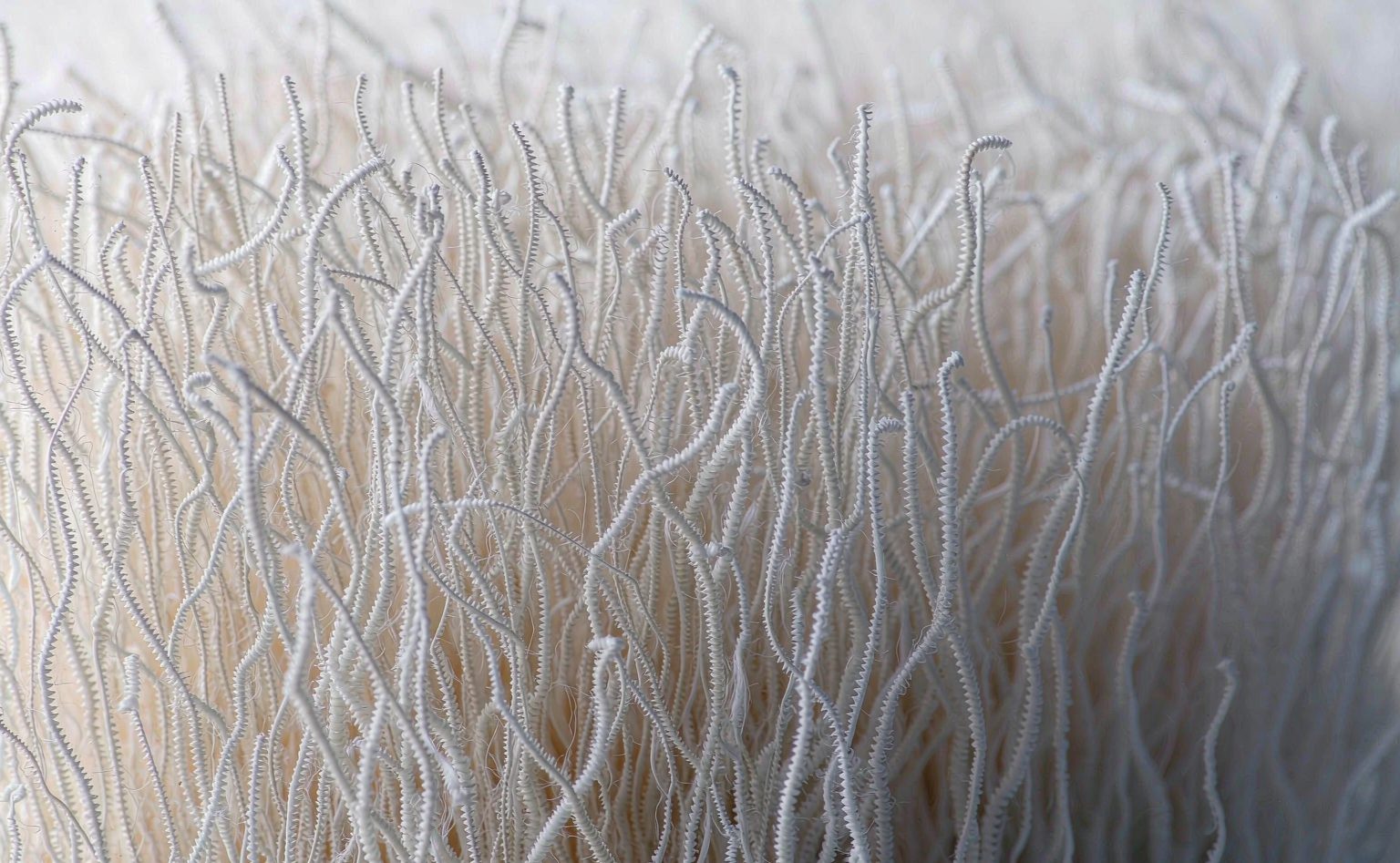
A conventional wool pad is carded flat. Fibres lie down, mat together, and lose the air space between them. Pressure concentrates where the fibres have nowhere to give.
Our patent holds the pile upright at roughly thirty millimetres. Each fibre compresses independently, so load is distributed across the whole surface rather than at the points where bone meets bedding.
The same structure is what allows air to keep moving — the reason the surface stays cooler than a foam of equivalent softness.
Roughly a quarter of human metabolism happens through the skin. When the surface cools, capillaries close; when it warms, pores open. The wool pile holds the skin surface near 32.7 °C — close to the body's own preferred 33 °C.
Wool is hydrophilic. It absorbs up to 35% of its own weight in moisture without feeling wet, then releases it as conditions dry. Skin stays dry; the microclimate stays stable.
Each fibre stands upright — a spring, 30 mm tall. Massed together they form a support plane with no hard edges. The outer keratin layer is smooth, which reduces friction and shear at the contact surface.
In a study published in the Medical Journal of Australia, wool bedding was associated with slower, steadier heart rate across the sleep cycle. A separate trial reported an increase of more than 25% in deep sleep.
The outer layer of human skin is built from keratin. Wool is also keratin — the same protein family, arranged differently. That similarity is why wool feels neutral against skin rather than foreign to it.
The fibre surface is smooth at this scale, which reduces the friction and shear that contribute to tissue damage when a body is moved or repositioned.
Roughly a quarter of human metabolism happens through the skin. The surface you sleep on is not passive — it is part of the system.
We can supply material specifications, test reports and samples for clinical evaluation.